The Rustenburg Synagogue 1924-2002
Religious life in Rustenburg
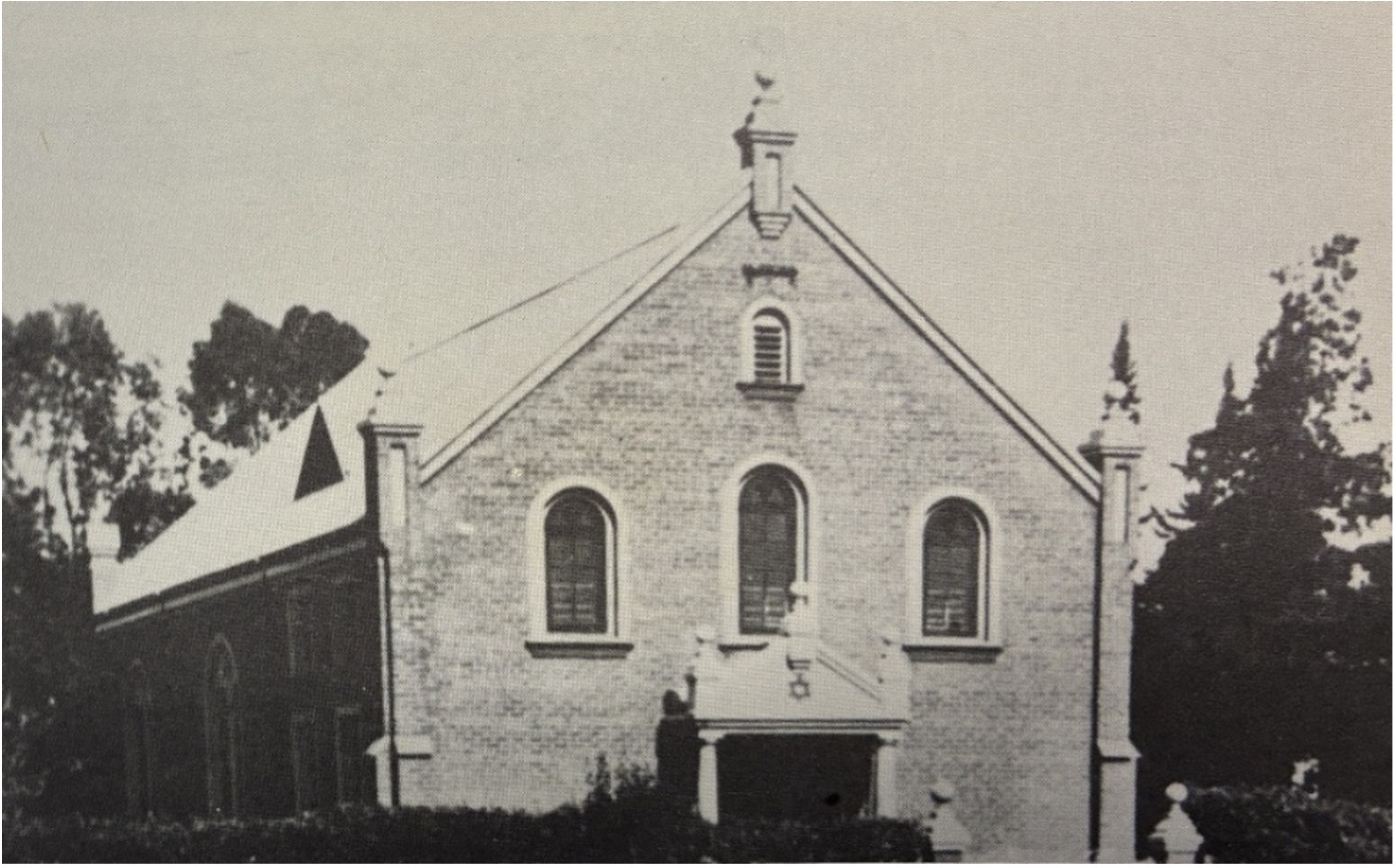
The first Jews from Prussia had settled in Rustenburg in the late 19th century. They were followed after 1880 by Jews from Eastern Europe. In 1890 the first Jewish marriage and the first Jewish burial took place in the village with visiting officiants. Though they began running services in 1904, when there about 10 Jewish families in the area, the community was not formally organised until the following year. With so few Jews it was hard to raise enough money for a minister and a synagogue building, but they persevered. A minister was appointed in 1911 and in 1924 a substantial and beautiful synagogue was consecrated by the Chief Rabbi of Johannesburg.
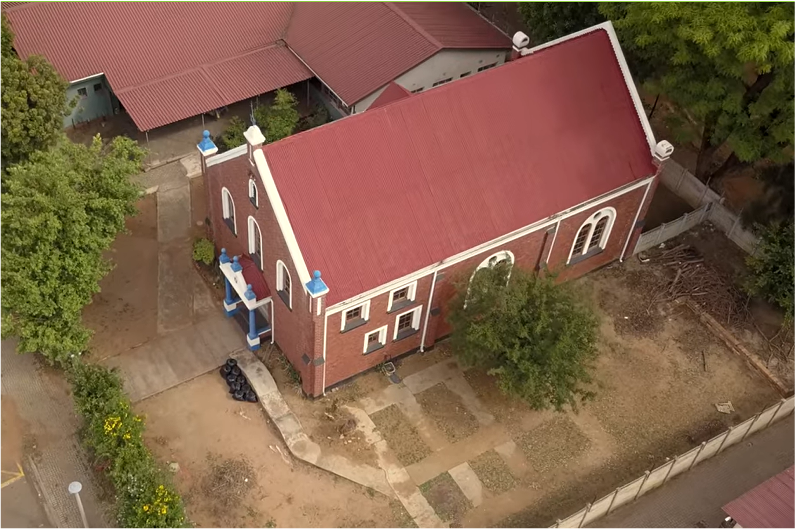
The Rustenburg Jewish community continued to grow and flourish, reaching its vibrant peak in the 1960s and early 70s with about 40 families. In 1974 they built and opened the Jacob Finkel Cultural Hall in the grounds of the synagogue. But it was sadly too late. By the late 1970s the Jewish community had started dwindling. By 2002 the synagogue was no longer in use and the Finkel Hall was rented out as a school. In 2022 the synagogue and hall were sold and repurposed as the Baptist ministry.
Establishment of the formal community in 1905
In 1905 the Rustenburg Hebrew Congregation was established with Mr J Samuel as the president. Because of the small numbers it was difficult to collect enough money for a minister and a synagogue. However, in 1911, they appointed Reverend Nachum Mendel Rabinowitz (1887-1966) as the first minister to the congregation. (He subsequently left for Volksrust.) The families who established the Rustenburg Hebrew Congregation included three of the five Wulfsohn brothers – Moses Simon Wulfsohn (1873-1930), Abraham Herman Wulfsohn (1880-1934), and Philip Wulfsohn (1880-1956). There was Harry Gawron (1899-1973), brother-in-law of Abraham Herman Wulfsohn, the two Sholomir brothers, Michael Sholomir (1875-1959) and Frank Sholomir (1883-1941). The group included Noah Kirsch (1859-1943) and his son-in law Bernard Harris (1883-1958); Solomon Mundel (1859-1928), a tobacco manufacturer; Morris Kadey (1890-1984), a watchmaker; and S Isaacs.
Fortunately, the five Wulfsohn brothers, who had emigrated from Žeimelis, Lithuania, to Rustenburg and prospered, donated land for a synagogue on erf no. 1083 on the corner of van Staden and Wolmarans Streets. A committee was formed who were responsible for the erection.
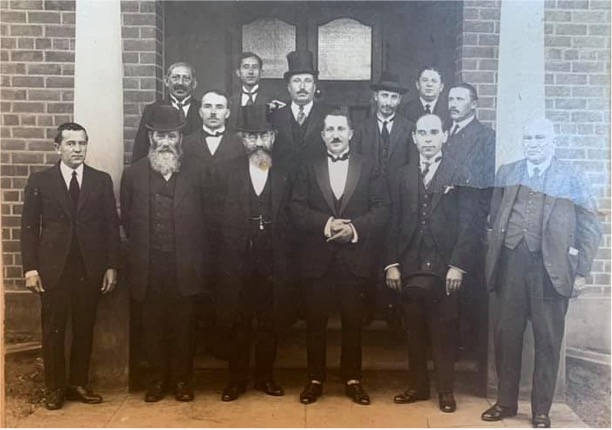
Back row, L-R: S. Isaacs, H. Gawron, F. Sholomir
Front row, L-R: M. Sholomir, N. Kirsch, B. Harris, Chief Rabbi Dr Landau, A.H. Wulfsohn, Rev D. Leibowitz, M. Kadey, P. Wulfsohn, S. Mundel.
The synagogue was officially opened by Chief Rabbi Dr Judah Leo Landau on the 9 April 1924. At the time of the consecration of the synagogue, Reverend David Hessel Leibowitz (1891-1948) served the community. He subsequent left Rustenburg and served as the Reverend in Parys, Orange Free State, where he died at the age of 57 in 1948. His widow, Hannah (Hennie) Lang (1890-1959), died in 1959 in Johannesburg.
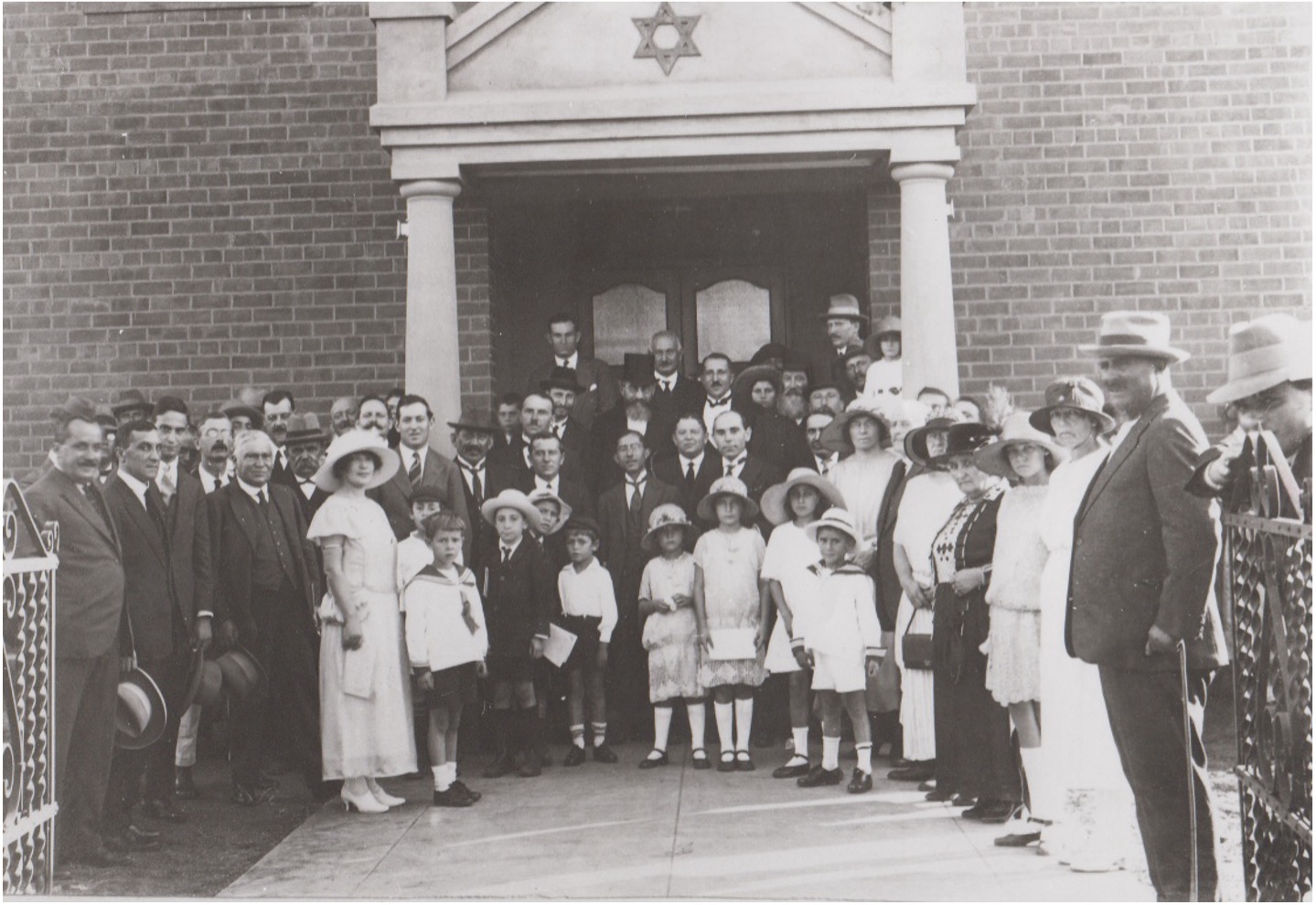
The Wulfsohn brothers were active in the congregation and Abraham Herman Wulfsohn served as the President. The shul was dedicated to the memory of the Wulfsohn siblings’ parents, whom they never saw again after arriving in South Africa. During the High Holy Days of Rosh Hashanah and Yom Kippur, Abraham Herman Wulfsohn was Ba’al Tefillah, Moses Simon Wulfsohn served as chazan, and Hyman Ber Wulfsohn sang in the choir.
The congregation slowly grew and in 1939 the Hebrew school, which was situated in the shul building, had 20 pupils. The community members integrated into the local economy as traders, merchants, and mine suppliers.
The vibrant community of the 1950s, ‘60s and early ‘70s
The 1950s, '60s and early '70s saw the heyday of the congregation, with about 40 families.
In the 1960s a number of women were responsible for running the children’s service. They were Zelda Rapeport, Pearl Wulfsohn and Chana Kramer. Over Shavuot, the shul was decorated with bales of hay and plants. A communal succah in the shul grounds was used over Succot.
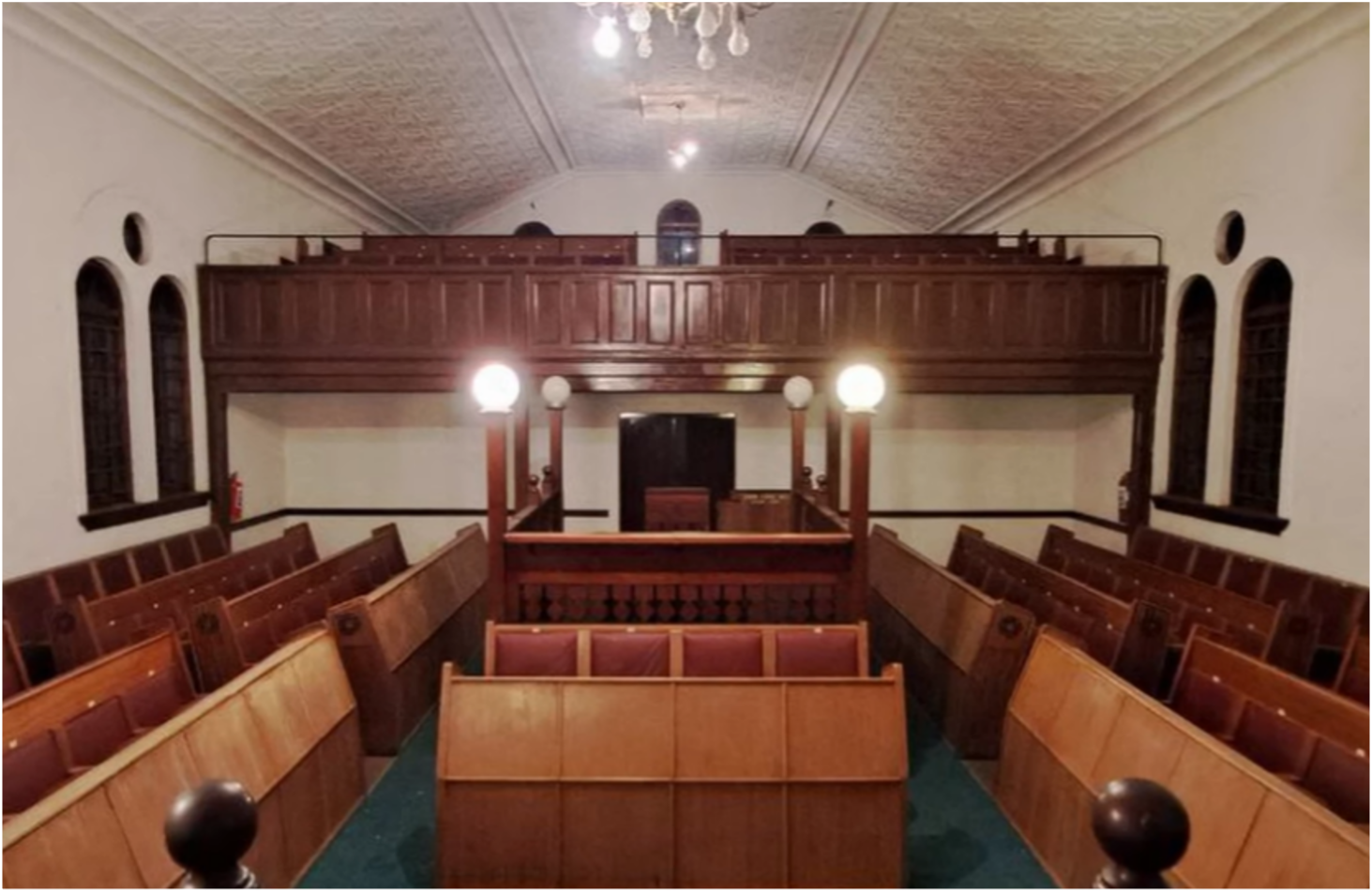
Functions were organised for Purim and Chanukah which took place in the MOTH hall adjacent to the shul. The youth movement, Habonim, also used the facilities at the shul. When Jack Rapeport served as Gabbai of the shul, he organised for the chairs to be upholstered so that they were more comfortable to sit on. Numerous bar mitzvahs were held in the synagogue, but no marriages were officiated there.
Over the years, various families made donations to the shul. A row of chairs was donated by Mr and Mrs M. Gien. A clock was donated by Victor and Leah Gersh on the occasion of their eldest son, Percy’s, bar mitzvah. The Been family made a donation in honour of their father, known as Oom Zalman. In 1977 Mr and Mrs Bernard Blecher presented another clock. In 1978 Phil, Rae, Willie and Annette Been donated a parocheth (Torah ark curtain) and cover for the bimah. On Rosh Hashanah 5744 (1983), Barney Cohen and his family donated the last parocheth to the congregation.
The golden jubilee of the synagogue in 1973
In 1973 the community celebrated the golden jubilee of the synagogue. A function was attended by Chief Rabbi Bernard M Casper of Johannesburg and by local civic dignitaries such as Clr and Mrs J Hattingh, the Mayor and Mayoress of Rustenburg.
The following year the Jacob Finkel Cultural Hall was opened in the shul grounds by Chief Rabbi Casper. Finkel was a bachelor who resided in Rustenburg and bequeathed his estate to the community. A building fund was established and numerous Jewish residents contributed. They included the families of Bernard Blecher, Morris Chatzkelowitz, Aubrey Friedman, Beryl Kacev, Sidney Kramer, Theo Kramer, Morris Oster, Natie Pastoll, Les Resnick, Cecil Wolpe, Natie Wolpe, Sydney Wolpe and Cecil Wulfsohn.
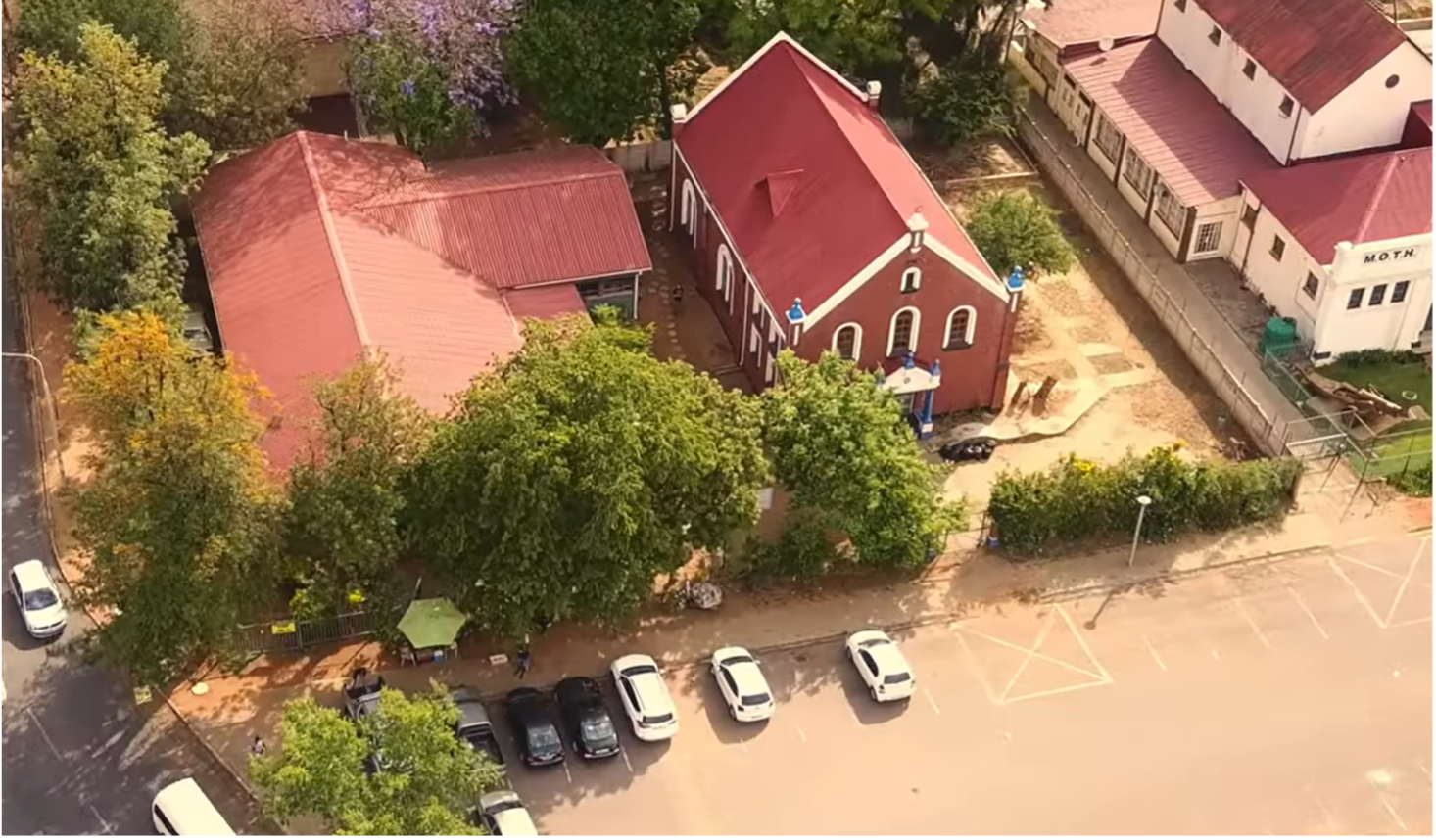
But it was really too late. The community was dwindling due to youngsters not returning after university, with better opportunities for work elsewhere and many retired parents joining them in the bigger cities.
The last Rabbi to serve the Rustenburg community was Rabbi Eliezer Baron, born in 1906 in Vilna, Lithuania. He died in 1998 in Jerusalem. He had emigrated from Lithuania to South Africa and married Annie Solovei on 17 June 1946 in Woodstock, Cape Town. He later served in various South African communities for nearly 60 years.
In the latter years, Royden Chatzkelowitz, served as chairman and lay reader of the Rustenburg Hebrew Congregation. By the turn of the 21st century, in 2002, the synagogue was no longer in use and remained empty for twenty years. The Jacob Finkel Hall was rented out as a primary school and was also rented by Pastor Karabo Msiza for services of the Central Baptist Church.
In February 2013 Jono David, renowned photographer and creator of HaChayim HaYehudim Jewish Photo Library, visited Rustenburg and photographed the shul and its contents, helping to preserve the memory of the shul and its interior.
In 2022 the synagogue and Jacob Finkel Cultural Hall were sold to the Baptist Church.
The message in a bottle
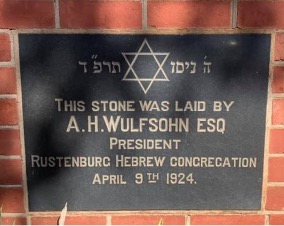
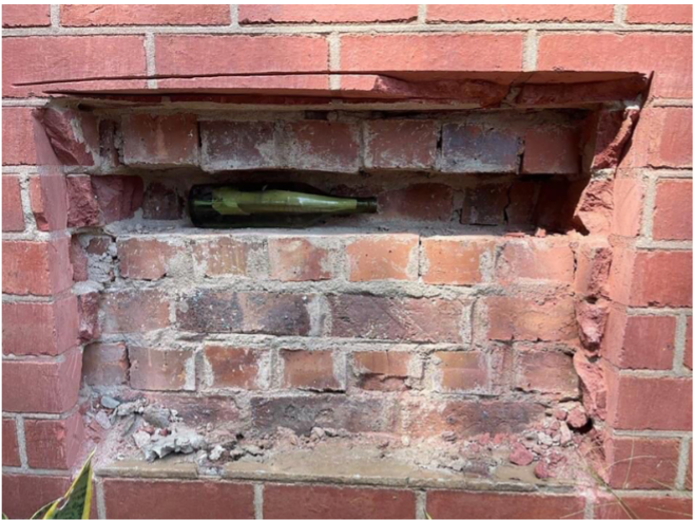
In February 2022, when Rabbi Moshe Silberhaft, the chief executive and spiritual leader of the Small Jewish Communities Association of South Africa, removed the foundation stone originally laid by Abraham Herman Wulfsohn on 9 April 1924 (as was usual when a synagogue was no longer part of a community), a time capsule was discovered hidden behind it. The glass capsule had been placed there in 1924 and contained the list of the members of the executive at the time of the opening of the shul as well as the order of service of the consecration, led by Chief Rabbi Landau.
The ceremony included the lighting of the eternal lamp, a procession with the "Scrolls of the Law" (Torah scrolls) during which psalms were recited, the opening of the ark, the Torah being placed in the ark, a prayer for the British Royal family, and the singing of Hatikvah. On the occasion, AH Wulfsohn laid the foundation stone.
The bottle and its documents were sent to Johannesburg and are kept at the South African Jewish Board of Deputies Archives in Johannesburg. The foundation stones and other commemorative plaques were placed at the New Rustenburg cemetery along with a granite stone inscribed with the history of the community.
 |
 |
In October 2018 Diane Saulson, nee Wulfsohn, granddaughter of Philip Wulfsohn, visited the shul with her nephew Joe Turpin, twin son of the late Gisèle Wulfsohn (1957-2011). Joe, an artist, recalled that 'My memories of visiting Rustenburg as a child were not to anybody’s home, or even the temple, but to the Jewish Cemetery. One of two that exist. My Grandfather who is buried there, passed on before I was born. After losing my own Mother as a teenager, I have a desire to connect with and explore her side of my family and its history. Even the sense of community abandonment, white flight, urban migration and now finally the sale of the temple’s building, add to the sense of loss'.
After the glass bottle was found by Rabbi Silberhaft, Joe accompanied him to Rustenburg in June 2022. This visit culminated in 2024 in an exhibition by Joe Turpin, Set in Stone, which was held at the South African Jewish Museum, Cape Town.
References and further reading
Articles in SA Jewish Report, Cape Jewish Chronicle, and Art Times.